A will should reflect your current life, not just the day you signed it. Major life events, such as changes in finances, marital status, health, or living arrangements, are common reasons to review and update your estate plan.
At Texas Horizons Law Group, our New Braunfels and Seguin estate planning attorneys regularly work with clients across Seguin, New Braunfels, and surrounding areas to ensure their wills stay legally accurate and aligned with their intentions. This guide highlights 12 life moments that may signal it’s time to revisit your estate plan.
Why Wills Need Updates
An outdated will can lead to confusion, unintended distributions, or court intervention. Texas law will enforce the last valid version of your will, even if your life circumstances have changed significantly. Changes in state tax laws or new legislation can also make a will outdated, potentially affecting how your assets are distributed or taxed.
If you’ve experienced personal or financial changes, your current will might no longer serve its purpose. Ensure your will aligns with your current intentions. This will help to prevent probate delays, safeguard your loved ones, and facilitate the seamless management of your estate. Regular reviews are essential for maintaining operational efficiency. They ensure your will is legally sound and fully up to date, in compliance with the latest legal requirements.
Life Events That Signal It's Time to Update Your Will
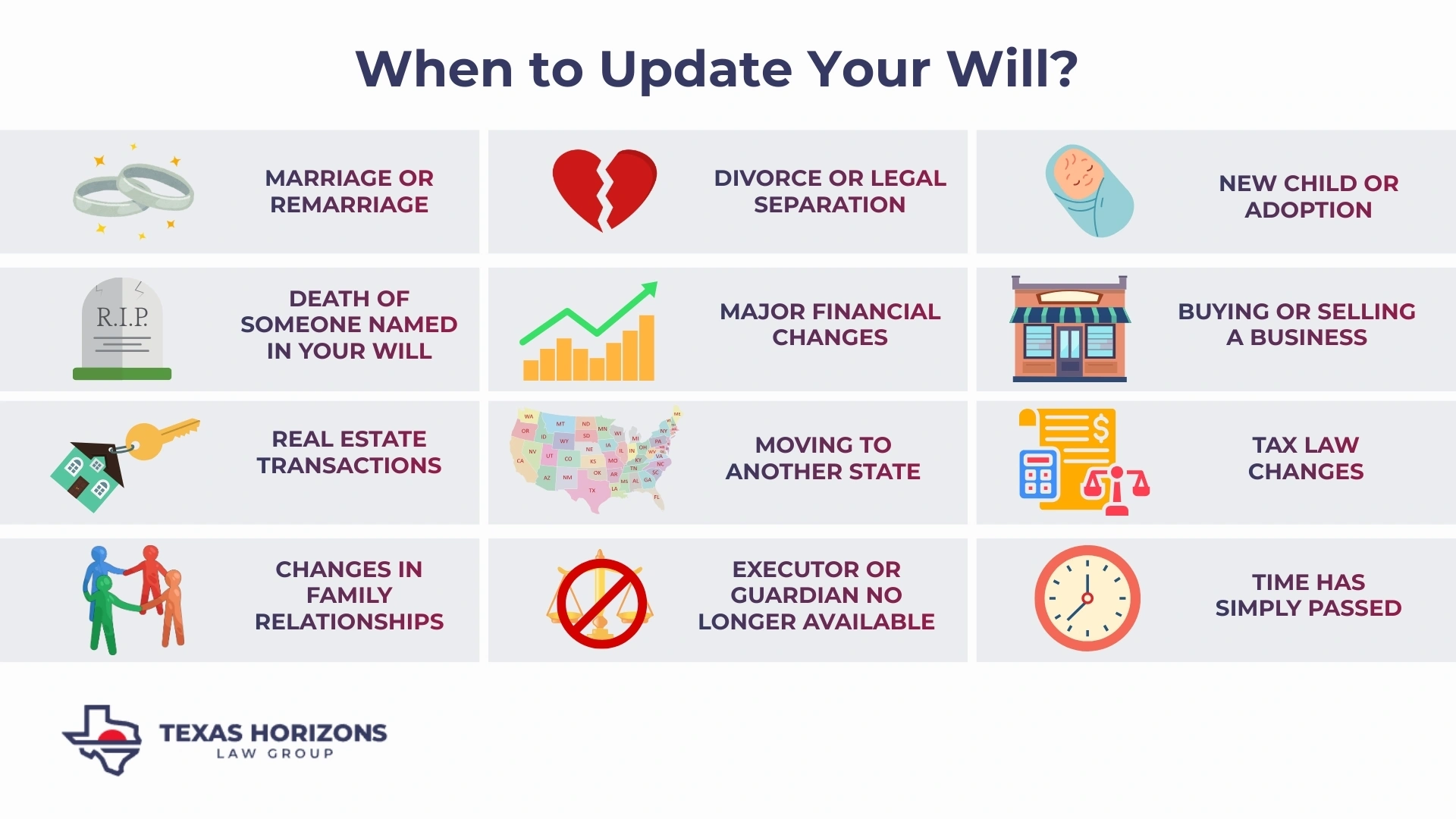
Over the course of your life, various changes may impact your estate plan. Below are 12 common situations where updating your will ensures your wishes remain clear, enforceable, and reflective of your circumstances. Remember to stay informed about new laws that could affect your estate plan.
1. Marriage or Remarriage
A new spouse may have legal inheritance rights under the Texas Estates Code § 255.001, even if they are not named in your existing will. If you’ve gotten married or remarried, revise your estate documents to:
- Name your spouse as a beneficiary.
- Adjust your executor, guardians, or trustees.
- Clarify asset ownership, especially for community property.
- Review and update beneficiary designations on life insurance, retirement accounts, and bank accounts.
Failing to make these changes can lead to disputes between your spouse and other beneficiaries, and may require the court to interpret your intentions.
2. Divorce or Legal Separation
After a divorce, you may no longer want your ex-spouse to inherit from your estate or make decisions on your behalf. Texas law removes many inheritance rights from ex-spouses by default under Section 123.151, but it’s still important to update your will and related documents.
In the event that you need to amend your will, it is your responsibility to remove or modify any previous wills. This will help you avoid legal issues and ensure that your assets are transferred to the intended recipients. This is especially relevant if you have children together or if your former spouse was named as executor or trustee.
3. New Child or Adoption

Whether through birth or adoption, a new child changes your family structure and your estate responsibilities. Your will should clearly:
- Name the child
- Designate guardians
- Outline how assets should be managed until the child reaches adulthood
If you fail to include the child, they may be treated as a pretermitted child under Section 255.051, which may entitle them to a share of your estate, but not necessarily as you would have intended.
4. Death of Someone Named in Your Will
If a beneficiary, executor, or guardian passes away, the roles and distributions in your will may no longer work. Review these sections to:
- Name alternates where needed
- Remove deceased individuals
- Reallocate gifts or responsibilities
- Add new beneficiaries if a previous beneficiary has passed away
Outdated roles can delay probate or force the court to appoint someone on your behalf.
5. Major Financial Changes
Large shifts in wealth, such as inheritance, investments, or business proceeds, can unbalance your current asset distribution. If you’ve gained or lost significant assets, revisit your will to:
- Add or remove property references
- Review and update your will to reflect changes in financial power and the disposition of certain assets
- Adjust percentages or specific gifts
- Consider new estate tax implications
Without proper updates, heirs may be left with unclear instructions or unequal inheritances.
6. Buying or Selling a Business

Starting or selling a business affects your overall estate. If you’ve acquired business interests or exited ownership, your will should reflect:
- Who should inherit business assets or proceeds
- Successor roles or leadership decisions
- Coordination with any buy-sell agreements
A well-integrated estate plan can support business continuity and reduce confusion among family or business partners.
7. Real Estate Transactions
Purchasing or selling property can change how your estate is divided. If the property listed in your will no longer exists, or you’ve added new property, update your will to reflect:
- Accurate legal descriptions
- New asset allocations
- Any need for out-of-state probate
If your property is located across state lines, the probate process can become complex. This is because different states have different laws and requirements. These laws and requirements may affect the distribution of your assets.
Properties held in different states may be subject to multiple probate proceedings if not addressed clearly in your estate documents.
8. Moving to Another State

State laws vary, and a will that’s valid in one state may not fully comply with another’s requirements. If you’ve moved to or from Texas:
- Confirm your will meets local legal standards.
- Update your guardian or executor appointments as needed.
- Account for differences in marital or property law.
Relocation can also impact how community property or digital assets are classified. Moving can also change which probate court will handle your estate.
9. Tax Law Changes
Tax thresholds and exemptions evolve. Changes in federal or state law might impact the size of your taxable estate or how gifts are treated. Updating your will helps you:
- Apply current tax strategies
- Avoid unexpected tax burdens on beneficiaries
- Reassess your gifting and charitable plans
Even small tax code changes may alter how trusts or large bequests are handled.
10. Changes in Family Relationships

Family dynamics shift. A new grandchild may deserve inclusion, or a once-close relative may no longer be a trusted choice. If your relationships have changed:
- Add or remove beneficiaries
- Adjust guardianship preferences
- Clarify your intentions to avoid disputes
Documenting these changes promptly can reduce confusion and minimize family conflict after your passing. Share the latest information with your relatives to avoid misinterpretations and ensure your intentions are clear.
11. Executor or Guardian No Longer Available
If your named executor, guardian, or trustee is deceased, moved, or unwilling to serve, your plan may stall in probate, as addressed under Section 304.001. Avoid this by:
- Naming alternates who are qualified and available.
- Confirming choices with the people you appoint.
- Reviewing legal roles every few years.
Choosing someone who understands your wishes and can manage the process makes estate administration smoother. Also, review and update any durable power of attorney arrangements to ensure they reflect your current wishes.
12. Time Has Simply Passed
Even without a life event, wills should be reviewed every 3 to 5 years. Laws evolve, assets change, and personal preferences shift. A regular review helps:
- Catch overlooked changes
- Prevent technical invalidity
- Ensure peace of mind for you and your family
Estate planning is not a one-time event. It’s an ongoing process that grows with your life.
Don’t Forget Your Digital Assets
Digital property can be lost or locked. This can happen without clear instructions in your estate plan. This includes online banking accounts, cryptocurrency, email accounts, photo storage, and social media profiles. More individuals are now incorporating digital access directions in their wills or creating separate digital asset directives.
Make sure your estate plan addresses:
- Access credentials for key accounts
- Appointed digital executors (if permitted)
- How digital property should be stored, transferred, or deleted
Texas law allows certain instructions regarding digital accounts, but the platforms’ terms of service also play a role. A carefully written plan reduces complications for your family and ensures your online presence is managed respectfully.
Working with an Estate Planning Attorney for Will Updates
Estate planning involves legal decisions that can have lasting impacts on your family, property, and legacy. Seeking counsel from an attorney ensures that your documents comply with Texas law and meet your current needs.
An estate planning lawyer can help:
- Review your existing will and related documents.
- Identify areas that may require updates due to life changes.
- Draft or revise wills, trusts, and powers of attorney in accordance with your goals.
Whether you're adjusting to a recent life event or conducting a routine review, legal guidance helps reduce errors and align your documents with your intentions.