Many people who own land in Texas need to know how long-term use might affect their land. Two legal doctrines often come up in these cases: prescriptive easement and adverse possession. Both involve long-term use of land without formal permission, but they lead to different outcomes.
At Texas Horizons Law Group, our Texas real estate attorneys provide legal counsel and support to families throughout our state.
What Is a Prescriptive Easement?

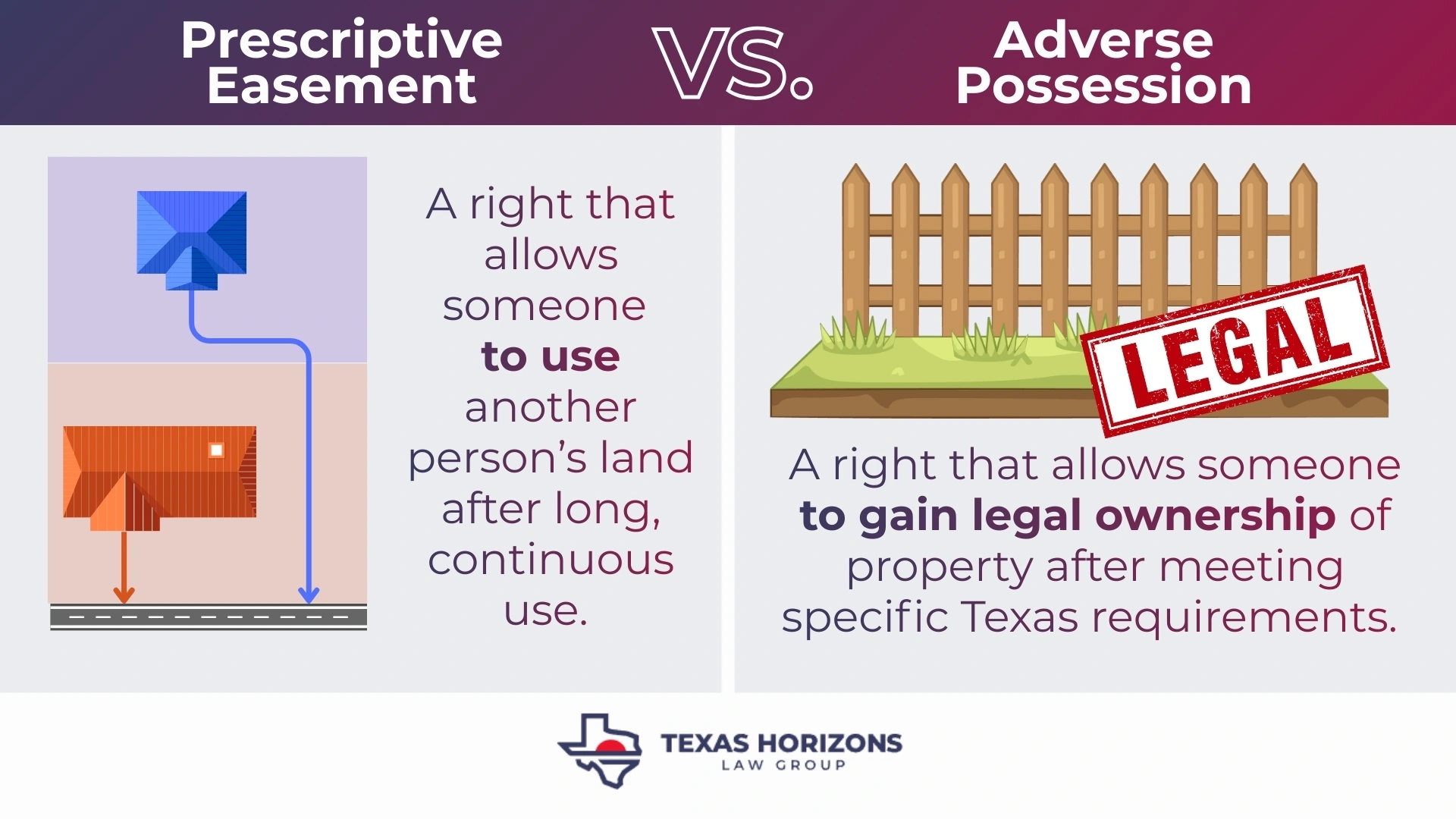
A prescriptive easement is a legal right to use part of someone else's land for a specific purpose. It does not transfer ownership. Instead, the user gains the right to continue using that portion of land in the way they have used it consistently over time. In this arrangement, the property benefiting from the easement is known as the dominant estate, while the property burdened by the easement is called the servient estate.
Example 1:
A neighbor drives across your land to reach a public road. They’ve done so every day for 12 years, and you’ve never stopped them or given permission. They may attempt to claim a prescriptive easement.
Example 2:
A rancher regularly moves livestock through a narrow strip of a neighbor’s land to access a water source. This route has been used each season for more than ten years without written or verbal permission.
Main Elements for a Prescriptive Easement in Texas
In Texas, prescriptive easements require:
- Open and notorious use: The use must be visible and apparent, not hidden or secret.
- Hostile use: The use must occur without the owner's permission or consent (this is considered unauthorized use or adverse use).
- Exclusive use: The user must act as though they have a right to the use, not simply share it with the public or the landowner.
- Continuous use for at least 10 years: Which is the required period for a prescriptive claim in Texas.
Prescriptive Easement Timelines Under Texas Law
To establish a prescriptive easement, the use of the property must be for a particular purpose and must occur without the owner's permission. Prescriptive easements often apply to access roads, driveways, or footpaths that have been used for a long time. In Texas, these timelines are set by Section 16.026 of the Civil Practice and Remedies Code, which outlines how long someone must possess land to claim title.
These easements are established by the use of the property for a specific, continuous purpose. The person claiming the easement does not receive title to the land. They only secure a legal right to keep using it for the same specific purpose.
Prescriptive easements are a form of adverse possession and prescriptive rights, but unlike adverse possession, they do not result in ownership transfer.
What Is Adverse Possession?
Adverse possession can result in someone gaining full ownership of land after using it continuously for a specific number of years under specific conditions. Texas law allows a person who openly and exclusively occupies another person's property without permission to eventually claim ownership of it. To successfully claim adverse possession, a person must satisfy the essential elements and specific elements required by law.
Let’s review common examples:
Example 1:
A person places a fence several feet over the actual boundary line and treats the enclosed area as their own yard. They maintain the land, store equipment on it, and have been the sole user for more than 10 years.
Example 2:
A neighbor moves a storage shed onto an unused portion of adjoining land and uses it exclusively. They keep tools and personal items inside, make improvements, and restrict access beyond the statutory period.
Requirements for an Adverse Possession Claim in Texas

The general elements required for an adverse possession claim in Texas include (and sufficient evidence must be provided to prove each element for a successful claim):
- Open possession: The use of the land must be apparent, visible, and evident to anyone.
- Hostile possession: The person must possess the land without the true owner's permission.
- Exclusive possession: The land must be used solely by the person making the claim, not shared with the public or the original owner.
- Continuous possession for a statutory period.
Timeframes for Adverse Possession Under Texas Law
Texas law recognizes several timeframes:
- 3 years with a registered deed and color of title.
- 5 years with a deed and payment of property taxes.
- 10 years without a deed or tax payments if the use is continuous and exclusive.
- 25 years in limited long-term cases.
The adverse possessor's use must meet all statutory requirements for an extended period or a specific period to establish a valid claim. Unlike a prescriptive easement, adverse possession can transfer title. If all requirements are met, a person can gain ownership of the property by asserting adverse possession. The statutory requirements are largely fact based and can be difficult to prove. Every case is different.
If the true owner does not act within the statutory period, they may lose ownership of the property to the adverse possessor.
Similarities Between Prescriptive Easement and Adverse Possession
Both legal doctrines share several features that often cause confusion among property owners:
- Both arise from long-term, unauthorized use of another person's land.
- Both require open and visible activity rather than secret use.
- Both require hostile use, meaning without the owner's permission.
- Both can create legal rights if the statutory period is met.
Key Differences Between Prescriptive Easement and Adverse Possession
Both doctrines involve long-term, unauthorized use of another person's property, but they lead to very different legal outcomes. The sections below explain these distinctions clearly.
Legal Right Gained
A prescriptive easement gives a right to use another's land for a narrow and specific purpose. It does not change ownership. In contrast, adverse possession can result in a complete transfer of ownership rights, giving legal title to the person in possession.
Ownership Rights
With a prescriptive easement, the landowner keeps ownership. The easement holder gets limited use rights. Adverse possession may result in the original owner losing all rights, with the adverse possessor becoming the new owner.
Required Use
Prescriptive easement claims focus on consistent use for a particular purpose, such as a path or access. Adverse possession claims require complete control and use of the land that exclude the original owner.
Legal Outcome
The result of a successful prescriptive easement claim is a continued right of use. A successful adverse possession claim ends with the transfer of title.
Permissive vs. Hostile Use
In both cases, the owner's permission defeats the claim. However, adverse possession typically demands stronger evidence of exclusive and hostile possession. Prescriptive easement claims may be more easily defeated if the owner also occasionally used the land.
Use Type
Prescriptive easements involve shared-use spaces like trails, driveways, or minor utility lines. Adverse possession applies to fenced-off areas, outbuildings, or any land where someone exercises complete and exclusive control.
Documents and Evidence That Matter in a Texas Property Dispute

If a dispute arises, the following items may influence the outcome:
- Recorded deeds and surveys
- Property tax records and payment receipts
- Written or verbal communications that confirm or reject permission
- Photos or videos showing the use of the land over time
- Testimony from neighbors or former owners
- Any agreements signed about use or access
These records may help prove whether the use was hostile, exclusive, and continuous, or whether it occurred with the owner's consent. For boundary disputes, a licensed surveyor’s report is key, and the Texas Real Estate Commission offers guidelines on what buyers and owners should look for in title documents.
How Texas Property Owners Can Prevent Land-Use Claims
Texas law requires continuous and hostile use before a prescriptive easement or adverse possession claim can succeed. Property owners can prevent these claims by taking direct steps that interrupt or block unauthorized use.
Effective actions include:
- Posting clear signage such as “No Trespassing” or “Private Road”.
- Giving written permission through a simple license letter to eliminate hostile use.
- Inspecting property boundaries to spot unapproved access early.
- Blocking entry with a locked gate, fence, or barrier.
- Removing structures placed on the land without consent.
- Sending a written notice stating that the use is not allowed.
Any clear interruption breaks the continuity required under Texas law and prevents the statutory period from being met. Early action remains the strongest way for Texas landowners to protect their property from unwanted claims.
Legal Tools Available to Texas Landowners

Property owners can act to protect their land through legal tools such as:
- Quiet title action: Used to confirm clear ownership and remove any competing claims. These actions are often filed under Texas Property Code §21.041 to remove clouds on title.
- Ejectment lawsuit: Used to remove someone physically occupying the land.
- Injunctions: Used to stop further use of the land by someone claiming access rights.
- Declaratory judgment: Used to clarify whether an easement exists or whether use is unauthorized.
Hiring a real estate attorney familiar with Texas land law can help identify which option makes sense for your situation.
Other Property Use Issues to Consider
Some easements are granted formally, such as utility easements recorded in county records. Easement rights can vary depending on the type of easement and the manner of its establishment.
These differ from prescriptive easements, which are based on long-term use without permission. Also, when someone believes they own land but cannot prove it, they may need to file a quiet title action to settle the question in court. If your land has no legal access, you may also face issues involving landlocked property, which can involve implied or easement-by-necessity claims.