Estate planning in Texas often includes setting up a trust to manage and protect assets. For many families, this step provides clarity, privacy, and control over how property is distributed in the future. Among the many types of trusts available, revocable and irrevocable trusts are the two most common. Each serves a different purpose and offers distinct benefits under Texas law.
This guide explains how these trusts work, highlights their similarities and differences, and outlines how to create one that fits your financial goals and family circumstances.
Definition of a Revocable Trust
A revocable trust, also known as a living trust, allows the creator (known as the grantor) to retain full control over the trust and its assets during their lifetime. The grantor can change the terms, add or remove assets, modify beneficiaries, or even dissolve the trust entirely if circumstances change.
In Texas, this flexibility makes revocable trusts a popular choice for individuals who want to maintain direct access to their assets while still planning for efficient transfer to heirs. Upon the grantor’s death, the trust typically becomes irrevocable, and the trustee (the person appointed to manage the trust) distributes the assets according to its terms.
Key benefits:
- Avoids probate, streamlining the transfer of assets
- Maintains privacy since trust documents are not a public record
- Allows ongoing management during the grantor’s lifetime
However, because the grantor retains control, assets within a revocable trust remain part of their taxable estate and are not protected from creditors or lawsuits.

Definition of an Irrevocable Trust
An irrevocable trust operates very differently. Once created and funded, it cannot be changed or revoked without the consent of all beneficiaries and, in many cases, court approval. The grantor transfers ownership of the assets to the trust and gives up direct control.
This lack of flexibility can seem daunting, but it also brings significant benefits. Assets placed in an irrevocable trust are generally shielded from creditors, potential lawsuits, and estate taxes. In Texas, irrevocable trusts are often used for long-term wealth preservation, Medicaid planning, or protecting assets for future generations.
Key benefits:
- Removes assets from the taxable estate
- Protects property from creditors and legal claims
- Can provide eligibility advantages for Medicaid planning
Irrevocable trusts require careful planning and clear intent since changes after creation are limited.
How Are Revocable and Irrevocable Trusts Different in Texas?
Both revocable and irrevocable trusts are used to manage and distribute assets according to the grantor’s wishes while keeping the process private. However, the level of control, flexibility, and protection differs greatly.
How to Create a Trust in Texas
Creating a trust involves several necessary steps that must comply with Texas trust law. The process and requirements vary slightly between revocable and irrevocable trusts.
How to Set Up a Revocable Trust
- Draft the Trust Document: The grantor works with an attorney to outline the trust’s terms, beneficiaries, and trustee.
- Sign and Notarize: Texas requires that the trust be in writing and signed by the grantor.
- Fund the Trust: The grantor transfers ownership of property, bank accounts, or investments into the trust.
- Maintain Flexibility: Because it’s revocable, the grantor can continue to adjust terms and assets throughout their lifetime.

How to Set Up an Irrevocable Trust
- Define the Trust’s Purpose: Whether for asset protection, tax planning, or charitable giving, clarity of intent is crucial.
- Draft and Finalize the Trust: Once signed, the terms are binding.
- Transfer Assets: The grantor gives up legal ownership of the transferred property.
- Ensure Compliance: Irrevocable trusts in Texas must adhere to state statutes, and the grantor should consider future implications before funding the trust.
Choose the trustee wisely. That person is responsible for managing assets, filing necessary reports, and distributing funds according to the trust’s terms.
In Texas, trustees can be individuals (family members, friends) or institutions (such as banks or trust companies). Individual trustees offer personal insight and familiarity, while corporate trustees bring professional management and impartiality. The ideal trustee should demonstrate reliability, integrity, and financial competence.
Why Choose a Revocable Trust
The advantages include:
- Simplified Transfer of Assets: Avoids probate court delays and costs.
- Privacy: Keeps family and financial matters out of the public record.
- Control: Allows ongoing management and updates during life.
- Continuity: Provides for smooth management if the grantor becomes incapacitated.
Why Choose an Irrevocable Trust
The advantages include:
- Asset Protection: Shields assets from future creditors or lawsuits.
- Tax Advantages: May reduce federal estate or income taxes.
- Wealth Preservation: Keeps property within the family for future generations.
- Medicaid Planning: Properly structured, it can help preserve assets while maintaining eligibility for benefits.
Disadvantages of Trusts
Here are a few potential drawbacks to consider:
- Complexity and Cost: Drafting, funding, and maintaining trusts may involve higher initial expenses.
- Loss of Control: Once assets move into an irrevocable trust, the grantor relinquishes ownership.
- Limited Protection in Revocable Trusts: Since the assets remain part of the grantor’s estate, they are not shielded from creditors.
When and Why Texans Use Trusts
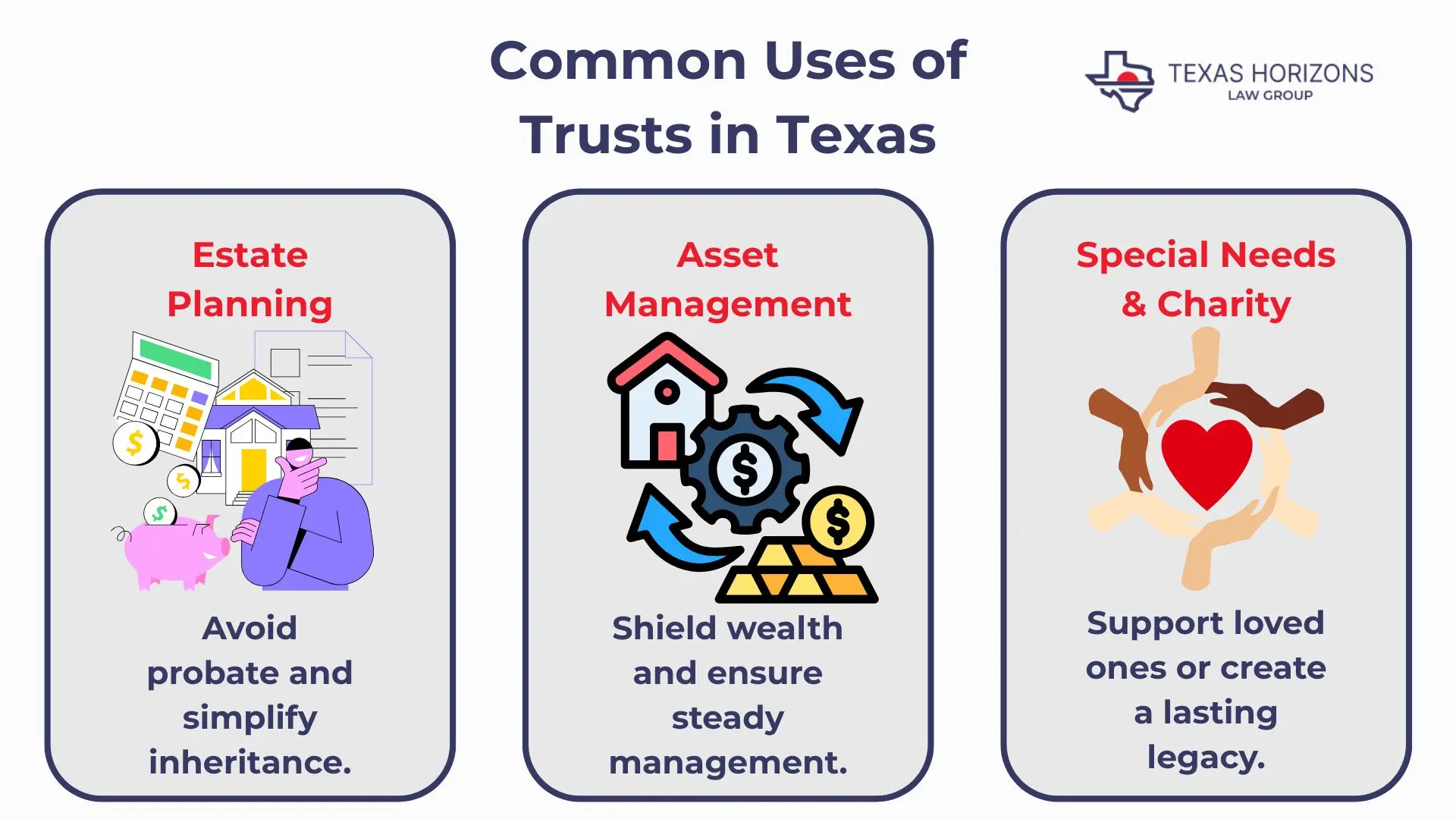
Estate Planning Tool
Trusts are foundational in Texas estate planning. They help ensure assets pass directly to beneficiaries without probate, minimize taxes, and reduce potential disputes among heirs. For blended families or those with complex estates, a trust can ensure fairness and clarity in distribution.
Safeguarding Assets
Professionals, business owners, and individuals with significant assets often use trusts to safeguard their wealth. A well-drafted irrevocable trust can prevent personal creditors or lawsuits from reaching family wealth, while ongoing management by a trustee ensures stability and growth for future beneficiaries.
Charitable Giving and Special Needs Planning
Trusts can also serve highly specific goals.
- Special Needs Trusts provide for individuals with disabilities without jeopardizing eligibility for government benefits.
- Charitable Trusts allow grantors to support causes they care about while enjoying potential tax benefits.
These specialized trusts help families meet unique financial or philanthropic objectives.